
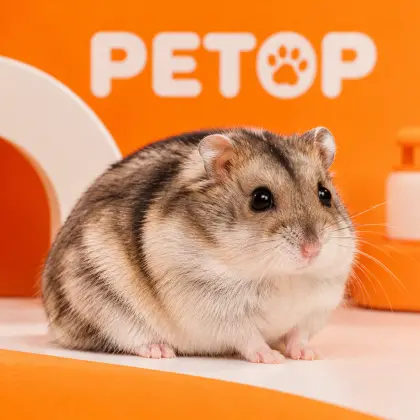
Djungarian hamster
Turns white in winter; calmer than Campbell’s.
Behavior traits
Scores from 1 to 5 reflect breed averages; every animal has its own personality.
The winter white dwarf hamster, also known as the Russian dwarf hamster, Djungarian hamster, Dzungarian hamster, striped dwarf hamster, Siberian hamster, or Siberian dwarf hamster, is one of three species of hamster in the genus Phodopus. Its body is ball-shaped and typically half the size of the golden hamster, so is called a dwarf hamster along with all Phodopus species. Features of the winter white hamster include a typically thick, dark grey dorsal stripe and furry feet. As winter approaches and the days shorten, the winter white dwarf hamster's dark fur is almost entirely replaced with white fur. In captivity, this does not usually happen as animals maintained as pets are generally housed indoors and exposed to artificial light that prevents the recognition of short winter daylengths. In the wild, they originate from the wheat fields of Kazakhstan, the meadows of Mongolia and Siberia, and the birch stands of Manchuria.
General care guide: Small pets
Small but not simple
Rabbits, guinea pigs, hamsters and chinchillas each have different needs; adults should take responsibility.
Space & diet
Big enclosures and daily free roam for rabbits and guinea pigs. Unlimited hay keeps ever-growing teeth healthy; guinea pigs need daily vitamin C. Avoid pine and cedar bedding.
Frequently asked questions
How long does a Djungarian hamster live?
A Djungarian hamster typically lives about 1.5-2 years, and good nutrition and regular checkups can extend that.
Is a Djungarian hamster good for apartments?
Yes — with enough daily activity, a Djungarian hamster adapts well to apartment life.
Is a Djungarian hamster good with children?
Yes — a Djungarian hamster is usually gentle and patient with kids, though play should always be supervised.