
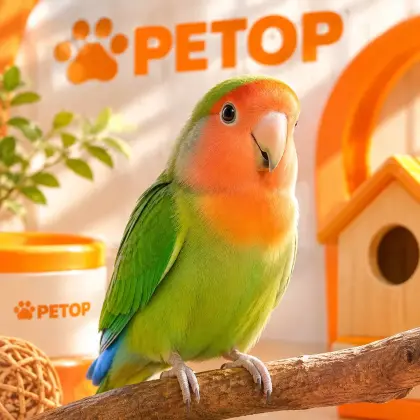
Lovebird
Small, colourful parrots that bond tightly; peach-faced, Fischer’s and masked are common.
Behavior traits
Scores from 1 to 5 reflect breed averages; every animal has its own personality.
Lovebird is the common name for the genus Agapornis, a small group of parrots in the Old World parrot family Psittaculidae. Of the nine extant species in the genus, all are native to the African continent, with the grey-headed lovebird being native to the African island of Madagascar. Social and affectionate, the name comes from the parrots' strong, monogamous pair bonding and the long periods which paired birds spend sitting together. Lovebirds live in small flocks and eat fruit, vegetables, grasses, and seeds. Some species are kept as pets, and several coloured mutations have been selectively bred in aviculture. The average lifespan is 10 to 12 years.
General care guide: Birds
Choosing a bird
From five-year finches to 70-year macaws, choose a captive-bred bird that fits your time. Wild-caught birds are illegal.
Housing
Bigger cages are better. Keep birds away from the kitchen—fumes from overheated non-stick pans kill birds. Allow 10–12 hours of sleep.
Diet
Seeds alone are not enough; add pellets, fresh vegetables and fruit. Avocado, chocolate, caffeine and salt are toxic.
Frequently asked questions
How long does a Lovebird live?
A Lovebird typically lives about 10-15 years, and good nutrition and regular checkups can extend that.
Is a Lovebird good for apartments?
Yes — with enough daily activity, a Lovebird adapts well to apartment life.
Is a Lovebird good with children?
A Lovebird needs extra training and supervision in homes with young children.