
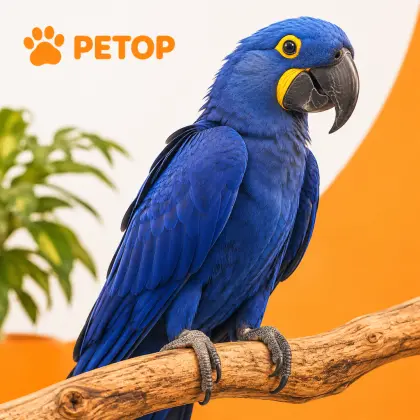
Hyacinth macaw
The largest flying parrot—endangered; legal only with permits.
Behavior traits
Scores from 1 to 5 reflect breed averages; every animal has its own personality.
The hyacinth macaw, or hyacinthine macaw, is a large parrot native to central and eastern South America. With a length of about one meter it is longer than any other species of parrot. It is the largest macaw and the largest flying parrot species. While generally easily recognized, it could be confused with the smaller Lear's macaw. Habitat loss and the trapping of wild birds for the pet trade have taken a heavy toll on their population in the wild, so the species is classified as Vulnerable on the International Union for Conservation of Nature's Red List, and it is protected by its listing on Appendix I of the Convention on International Trade in Endangered Species of Wild Fauna and Flora (CITES).
General care guide: Birds
Choosing a bird
From five-year finches to 70-year macaws, choose a captive-bred bird that fits your time. Wild-caught birds are illegal.
Housing
Bigger cages are better. Keep birds away from the kitchen—fumes from overheated non-stick pans kill birds. Allow 10–12 hours of sleep.
Diet
Seeds alone are not enough; add pellets, fresh vegetables and fruit. Avocado, chocolate, caffeine and salt are toxic.
Frequently asked questions
How long does a Hyacinth macaw live?
A Hyacinth macaw typically lives about 50-60 years, and good nutrition and regular checkups can extend that.
Is a Hyacinth macaw good for apartments?
A Hyacinth macaw needs more space and lots of exercise; a small apartment isn’t ideal.
Is a Hyacinth macaw good with children?
A Hyacinth macaw needs extra training and supervision in homes with young children.